 Actually this knife is used on bones not meat. It's very useful for
splitting bones for use in making soup stock. About the stupidest thing
I've ever read about knives is, "It's not important for a meat cleaver to
be sharp". The hell it isn't! The edge of your Meat Cleaver should be
stoned as sharp as any other knife, just at a steeper angle to
make a more durable edge. The last thing you want is a dull cleaver that
skids rather than bites - sending heavy bones flying across your kitchen
straight into the delicate antique glassware your dear aunt Sara gave
you, and she's visiting next week!
Actually this knife is used on bones not meat. It's very useful for
splitting bones for use in making soup stock. About the stupidest thing
I've ever read about knives is, "It's not important for a meat cleaver to
be sharp". The hell it isn't! The edge of your Meat Cleaver should be
stoned as sharp as any other knife, just at a steeper angle to
make a more durable edge. The last thing you want is a dull cleaver that
skids rather than bites - sending heavy bones flying across your kitchen
straight into the delicate antique glassware your dear aunt Sara gave
you, and she's visiting next week!
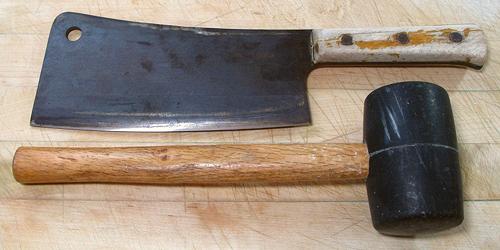
The photo specimen is an 8 inch model by J.A.Henckels of Germany. It's
continued usability attests to its quality - it spent my vegetarian years
embedded in a eucalyptus stump out behind the house, where I had attempted
to use it to cut kindling. It didn't work well at all for that purpose -
hatchet strongly recommended.
|
I strongly recommend that in the home kitchen you do not use the meat cleaver free-form in the manner butchers do. Instead place the (properly sharpened) edge where you want it on the bone and drive it through with a soft faced mallet. A 1 pound soft faced mallet will do the job. When splitting bones, do so on a very strong, steady hardwood or plastic cutting surface, and always split lengthwise. Bones are very difficult to break crosswise. If you need them cut crosswise, have the butcher saw them for you. Have the area clear, because you may have some fragments flying around (much less if you use the mallet as described above), |